It’s normal for a man’s testosterone — the primary male sex hormone — to gradually decline as he gets older. But a growing body of scientific research suggests something else is happening: testosterone levels appear to be dropping across entire populations, generation by generation, in a way that can’t be explained by aging alone.
In other words, a 50-year-old man today likely has lower testosterone than a 50-year-old man did 20 or 30 years ago.
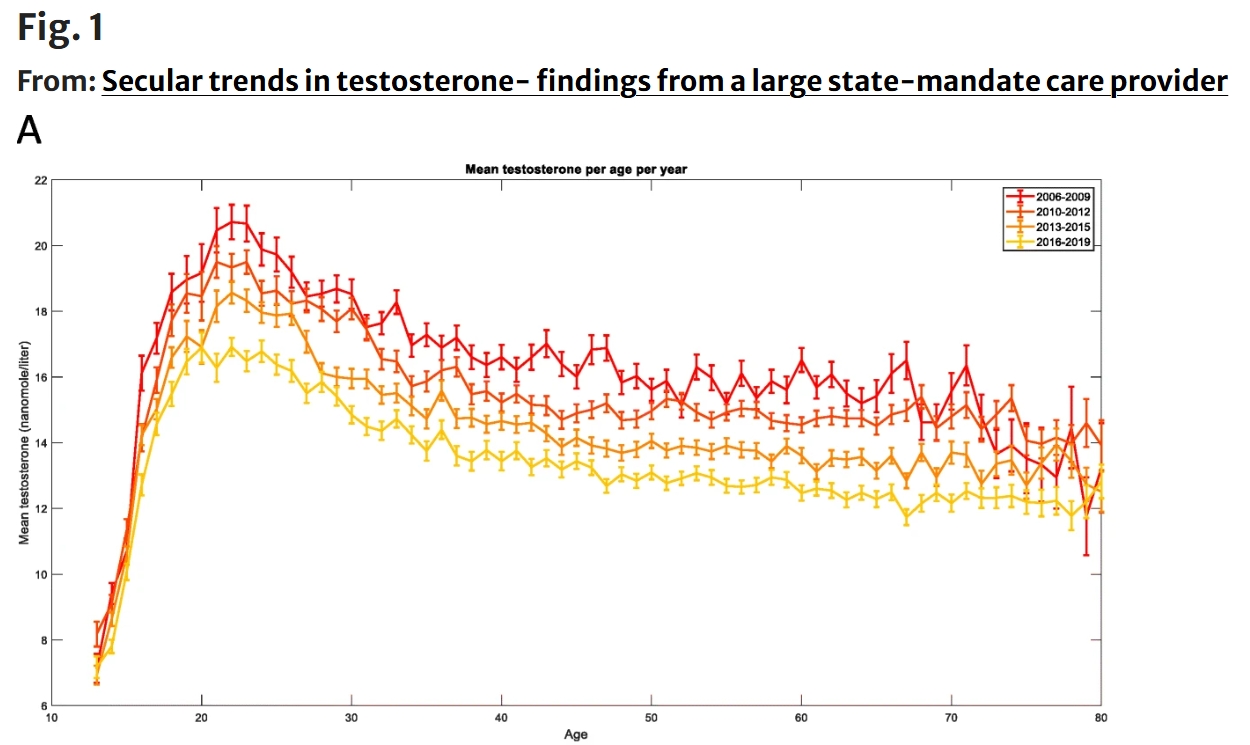
What the research shows
One of the first major studies to identify this trend followed more than 1,500 American men in the Boston area from 1987 to 2004. Researchers found a significant decline in testosterone over time that went beyond what aging would predict — and it wasn’t explained by changes in smoking, weight, or other health factors.
Similar findings have emerged from Denmark, Israel, and other countries. A large Israeli study of more than 100,000 men between 2006 and 2019 confirmed the trend was continuing well into the 21st century.
The most comprehensive analysis to date, published in 2025, reviewed data from over 1,500 study groups and more than one million men worldwide, spanning from 1971 to 2024. It confirmed a statistically significant decline in testosterone levels over time — even after accounting for differences in age, body weight, and the type of blood test used
How big is the drop?
One study of nearly 1,000 U.S. Air Force veterans found that average testosterone fell by about 19% over 20 years — and this happened even among men who maintained a stable weight throughout the study.
Is obesity to blame?
Excess body weight is one of the strongest factors linked to lower testosterone. As obesity rates have risen, some researchers initially suspected this could explain the population-wide decline. However, multiple studies have concluded that rising obesity rates are not enough to account for the full extent of the drop. In the 2025 global review, there was no increase in average body weight among the study populations, yet testosterone still declined.
What might be causing it?
Scientists don’t have a definitive answer yet, but several factors are being investigated:
- Environmental chemicals: Substances like phthalates (found in plastics), bisphenol A (BPA), and certain pesticides are known to interfere with hormones and are increasingly present in everyday life.
- Metabolic health: Rising rates of diabetes, insulin resistance, and metabolic syndrome are closely linked to lower testosterone.
- Lifestyle changes: Several symptoms of modern living such as less physical activity, poor sleep, higher stress levels, and dietary shifts may all play a role.
Interestingly, the 2025 review found that not only testosterone but also LH — a brain hormone that signals the body to produce testosterone — has been declining. This suggests the issue may originate in the brain’s hormonal control center (the hypothalamus and pituitary gland), not just in the testes themselves.
Understanding testosterone testing: it’s not just one number
If you’re concerned about your testosterone levels, it helps to understand that there isn’t just one way to measure it. Testosterone travels through the bloodstream in different forms, and each tells a slightly different story about what’s happening in your body.
- Total testosterone is the most common test and the recommended starting point. It measures all the testosterone in your blood — both the testosterone that is attached to proteins and the small amount that is floating freely. Most guidelines recommend this as the first test, drawn from a morning blood sample (ideally before 10 or 11 a.m.) on at least two separate occasions, since levels naturally fluctuate throughout the day and from day to day.
- Free testosterone is the small fraction (about 2–4%) of testosterone that is not attached to any protein. Because it is unbound, it is considered the “active” form that your body’s tissues can use immediately. Free testosterone testing becomes important when total testosterone results are borderline or when conditions exist that might affect how much testosterone is bound to proteins. It is best measured by a method called equilibrium dialysis, or calculated using a formula that factors in total testosterone, SHBG, and albumin levels. Common direct immunoassay tests for free testosterone are considered inaccurate and are not recommended by medical guidelines.
- Bioavailable testosterone includes free testosterone plus testosterone that is loosely attached to a protein called albumin. Because this albumin-bound testosterone can easily detach and become available to tissues — especially in organs like the brain and liver — it is considered biologically active. This test is less commonly ordered but can provide additional information in certain situations.
- SHBG (sex hormone-binding globulin) is a protein produced by the liver that tightly binds to testosterone and controls how much is available for the body to use. SHBG levels matter because they directly affect the interpretation of a total testosterone result. For example, a man with low SHBG (common in obesity, type 2 diabetes, or insulin resistance) might have a low total testosterone reading but a perfectly normal free testosterone level — meaning his body actually has enough active testosterone. Conversely, a man with high SHBG (which can occur with aging, liver disease, or certain medications) might have a normal-looking total testosterone but actually have low free testosterone, leaving his tissues short of the hormone they need.
In most cases, a total testosterone test is sufficient. But when SHBG levels are suspected to be abnormal — or when total testosterone falls in a gray zone — checking free testosterone and SHBG can provide a much clearer picture of whether a man truly has a testosterone deficiency.nitive answer yet, but several factors are being investigated:
Should you be worried?
Low testosterone can contribute to fatigue, hair loss, reduced muscle mass, low mood, decreased sex drive, and other health concerns. However, not every man with lower testosterone levels will experience symptoms, and testosterone levels vary widely from person to person.
If you’re experiencing symptoms that concern you, a simple blood test can measure your testosterone level. Book in with Dr. Joseph Cheng or Dr. Olisa Mak, our Naturopathic Doctors to get your levels tested and for an in-depth discussion of your results. Prevention should start now.
THE BOTTOM LINE
The evidence from multiple countries and decades of research points to a real, generational decline in men’s testosterone levels — one that goes beyond normal aging and isn’t fully explained by weight gain. While the exact causes remain under investigation, awareness of this trend is an important step toward understanding and addressing men’s health in the modern era.